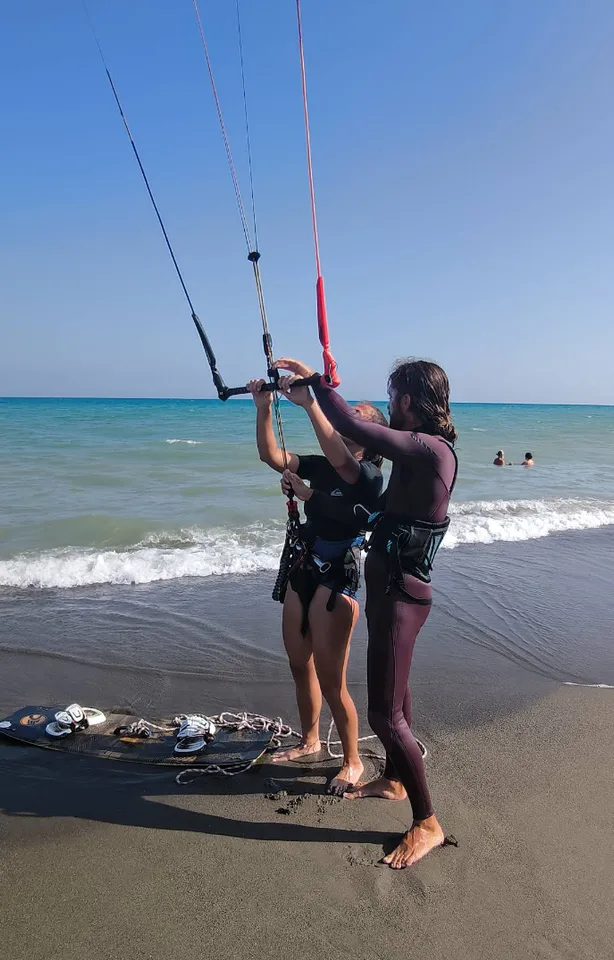
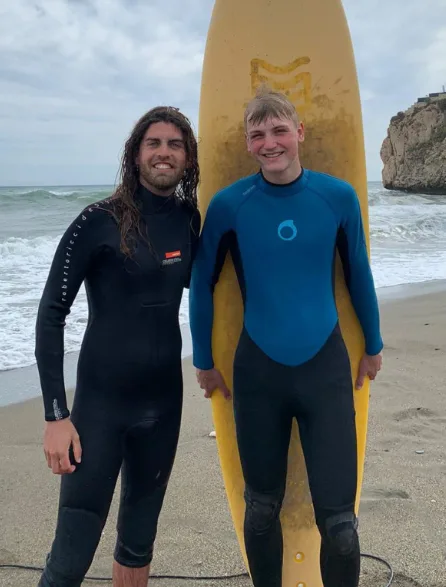
The kite gets the attention, but the board keeps you floating when the wind drops for a second. Choosing the wrong size or type adds months of frustration; choosing well shortens the path to your first long ride. Here are the types we use in kitesurf and how they fit your body and level.
Twin tip vs directional: which is for you?
The twin tip (symmetrical board) is standard for 90% of riders. You can ride both directions without switching feet, it's stable, forgives mistakes and is what we use for beginners. The directional (surfboard with or without straps) is for riding waves with the kite: one direction only, more technique required, and the next step once you master the twin tip.
Size by weight and height
Kitesurf boards are measured in length in centimetres and volume in litres. Volume is what keeps you afloat: more body weight, more litres needed. Quick reference for beginner-intermediate twin tip:
- Under 65 kg: 135–140 cm, around 35–40 L. Agile board, ideal for lighter riders or teenagers.
- 65–80 kg: 140–145 cm, 40–45 L. The most common range in our lessons.
- 80–95 kg: 145–150 cm, 45–50 L. More surface to plane in lighter wind.
- Over 95 kg: 150–160 cm, 50 L or more. We prioritise float and stability.
Height affects stance: someone very tall with long legs may prefer a slightly longer board so they're not too cramped. It's not exact science: that's why we try and adjust in lessons.
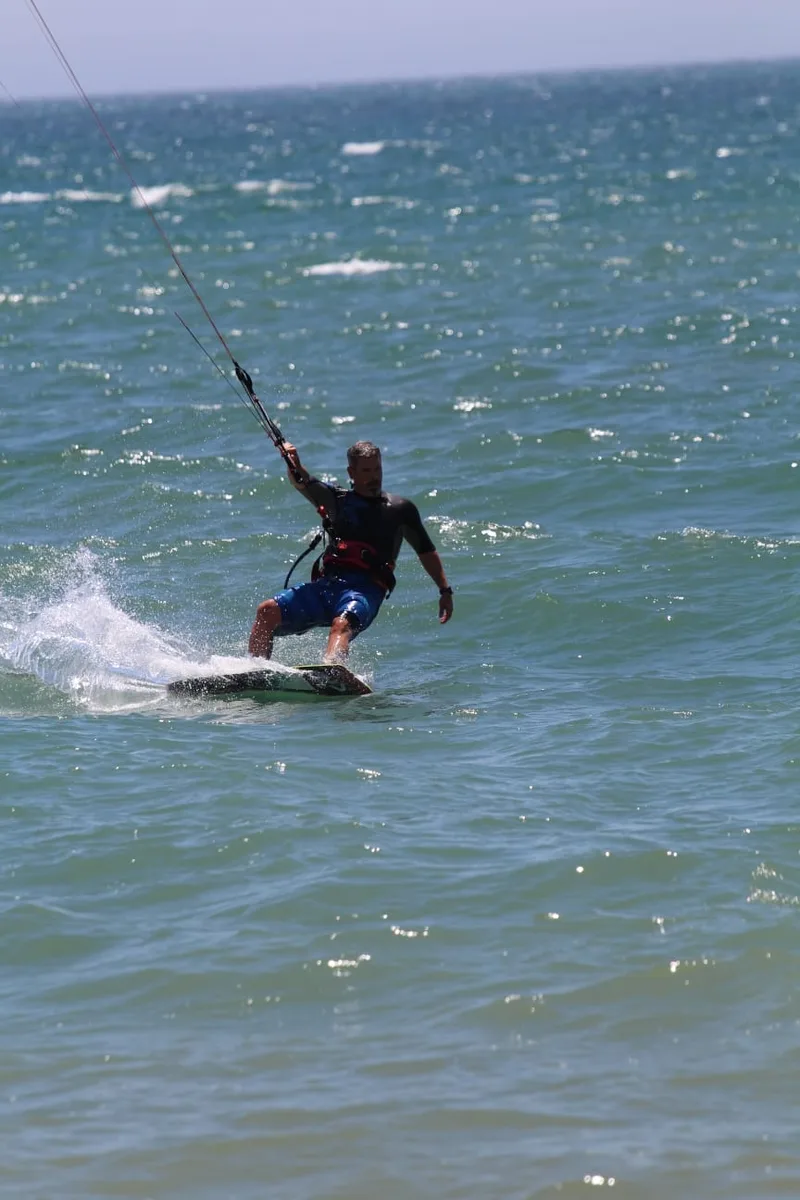
Level: how your board needs change
- Beginner (0–5 sessions): large board, low rocker (curvature), high volume. We want you to float even with poor stance.
- Intermediate (5–20 sessions): you can drop 5 cm and try slightly less volume. You start to feel the board in turns.
- Advanced: smaller boards, more rocker, less forgiveness but more manoeuvrability. Only when waterstart is automatic.
Buy or rent at first?
Our recommendation is clear: don't buy a board until you have at least ten sessions. Your weight, level and Málaga's wind type will change what you need. In our lessons gear is included and we adapt it daily. When you know what you enjoy (freeride, freestyle, waves), then yes: ask your instructor before spending €600.
"The right board isn't the prettiest in the catalogue: it's the one that lets you practise an hour longer without fighting the water."
Ready to try which board suits you? Book your first lesson and you'll leave the water knowing what to look for when you buy your own.