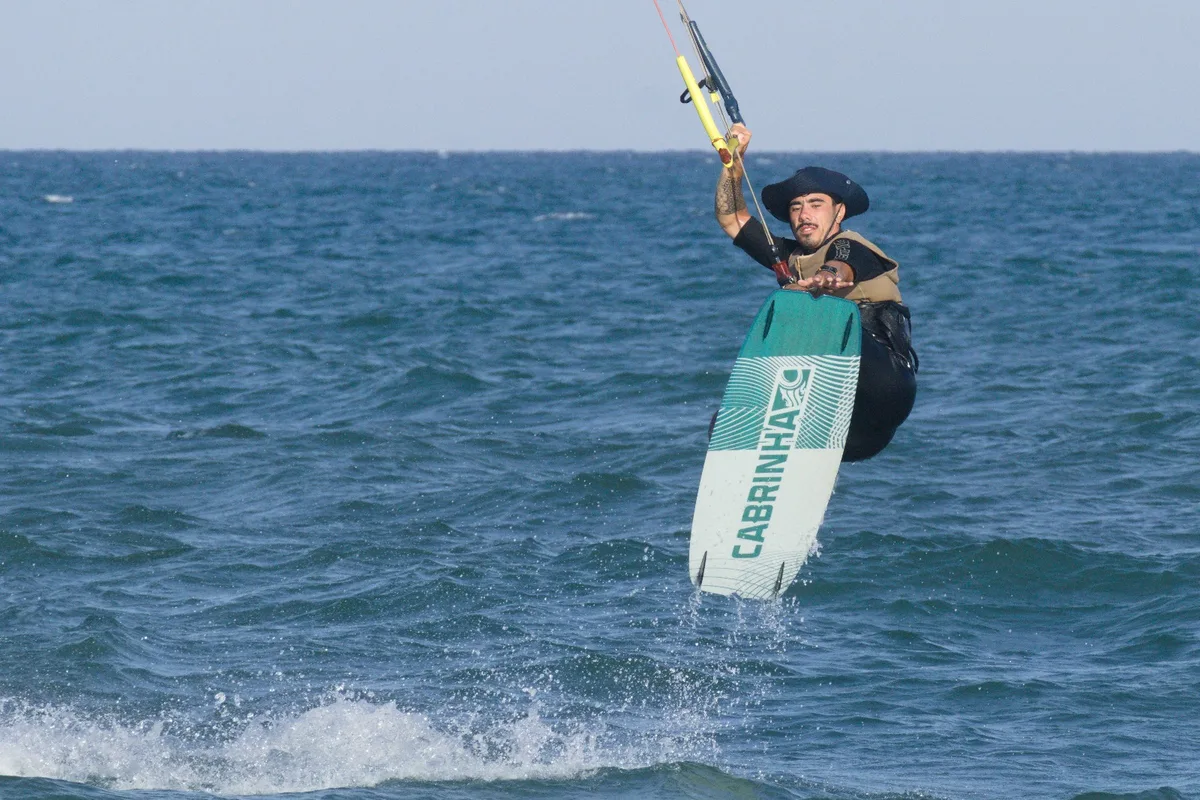
In summer, a Costa del Sol beach can have twenty kites in the air at once. That's not a problem if everyone shares the same rules. Kitesurfing has no traffic lights, but it does have right-of-way priorities that prevent collisions, tangled lines and arguments on the beach. In our kitesurf lessons in Málaga we explain them before you hit the water.
The golden rule: starboard tack has priority
Imagine looking where you're riding. If your kite is on the right side of the wind (starboard tack), you have priority over someone coming with the kite on the left (port tack). The rider without priority must give way: lower the kite, change course or stop. It's not weakness: it's the international rule used at every serious spot.
How to overtake without causing trouble
Overtaking in kitesurfing isn't like cycling: you can't pass wherever you like. The practical rule is overtake upwind (toward where the wind blows), leaving at least two line lengths of margin. If you pass downwind, your kite can drop onto the other rider's kite and lines tangle in seconds.
- Look before you turn: a sharp course change without looking behind is the number one cause of incidents among intermediate riders.
- Signal your intention: raise your hand or shout "passing!" if you're overtaking in a busy zone.
- Don't overtake someone learning: a student on their third lesson may turn without warning. Give them space.
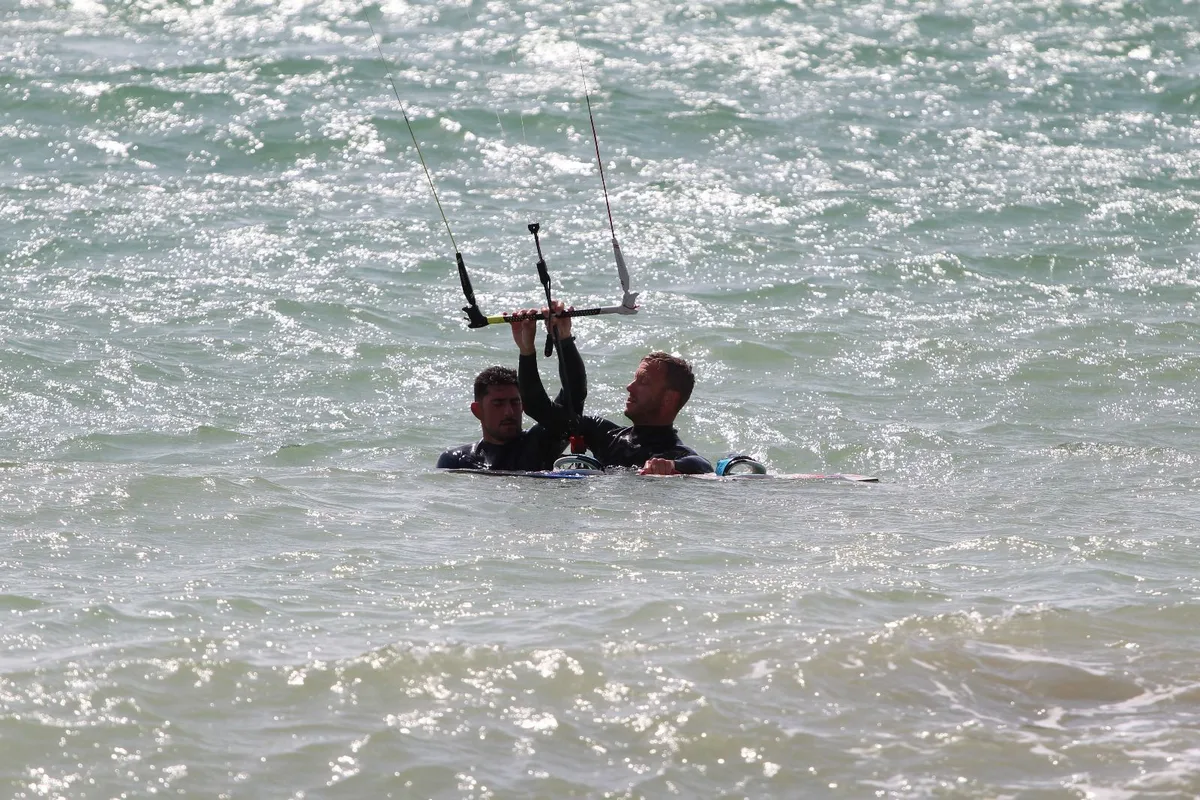
Special zones: shore, swimmers and launch area
Near the shore, common sense rules. Swimmers always have absolute priority. If you see people swimming, move your kite away and ride further out. The launch and landing zone is sacred: don't ride through it, and don't leave your kite floating and blocking others.
"There's no police in the water, but there is respect. Lose it and you lose the session."
What to do if there's an incident
If you collide with another rider, first check no one is hurt. Then untangle lines calmly (never with the kite under tension). If it's serious, follow the spot protocol: alert the lifeguard or nearest instructor. At Isobaras we carry radio and first aid on every session.
Want to practise these rules with someone correcting you in real time? Book a beginner lesson or a private lesson. Going out with clear rules is as important as knowing how to waterstart.